
How to Book Transportation for a Youth Sports Tournament
Tournament weekends compress a season's logistics into 48 hours. Here's how to plan transportation for youth sports tournaments — vehicle choice, driver hours, meal stops, weather contingencies, and the conversation to have with your bus operator before you book.

Why youth sports tournament transportation is its own thing
Booking a bus for a regular practice or an away game is straightforward. Booking a bus for a tournament is a different problem entirely.
Tournaments compress an entire season's worth of logistics into 48 or 72 hours. Multiple games, multiple fields, hotel transfers, team meals, uniform changes, and the constant possibility that an early game gets pushed back by rain and the whole schedule cascades.
The transportation decisions you make in the planning phase determine whether your team arrives to games rested and ready, or rolls in seven minutes before kickoff still trying to find the right field.
This guide is for the coach, team parent, or club director who is booking tournament transportation for the first time, or who has done it before and wants to avoid repeating the same mistakes.
Start with the tournament packet, not the bus quote
The first move is not calling a bus company. The first move is reading the tournament packet from front to back.
Most tournament packets are released 30 to 60 days before the event. They contain the information that determines every transportation decision: which fields you're playing at, where check-in happens, the hotel block (if any), the schedule of games, and the rules about team transportation in the venue parking lots.
The packet will also tell you whether the tournament uses one central facility or multiple complexes scattered across an area. This is the single biggest variable.
A tournament held entirely at one complex (Spooky Nook in PA, the ESP Sports Network in Maryland, the IMG Academy in Florida) means one bus parked all day with the team rotating between fields a short walk away.
A tournament scattered across multiple fields in a region (most Jersey Shore and Poconos tournaments) means transportation between venues becomes part of the schedule, and your bus needs to be available between games, not just at start and end.
The three transportation models for tournaments
Model one: drop and return.
The bus drops your team at the venue in the morning and picks them up at the end of the day. This works for single-complex tournaments where the bus isn't needed during the day.
Cheapest option. Requires no live driver hours during the games.
Model two: live availability.
The bus and driver stay with the team all day, moving between fields, hotels, and meal stops as needed.
Most expensive option. Necessary for multi-venue tournaments and ideal when you're worried about weather delays or schedule changes.
Model three: split shifts.
The bus drops in the morning, leaves to handle other work, and returns at a scheduled time. Sometimes a different driver returns than the one who dropped, depending on federal hours-of-service rules.
Saves money compared to live availability but requires the tournament schedule to be reliable. Risky for tournaments known for rain delays.
For most multi-day youth tournaments, the right answer is live availability for game days and drop-and-return for the travel day. That balances cost and flexibility.
The 14-hour driver rule and what it means for weekend tournaments
Federal hours-of-service rules limit commercial drivers to 14 consecutive on-duty hours, 10 of which can be actual driving.
For a single-day tournament that starts at 7 a.m. and ends at 9 p.m., that's tight but doable with one driver.
For a multi-day tournament where the same bus is parked at a hotel overnight, a single driver can typically handle the round trip plus on-tournament shuttling if the hours are managed.
For tournaments where the bus is moving constantly between fields, hotels, and meals across a long day, you may need a second driver. This is a price increase your operator should flag in the original quote.
Ask the question explicitly when you book: "Will this trip require one driver or two?" If the operator hesitates, push for a clearer answer. Driver rotation logistics affect both your cost and your schedule.
Picking the right vehicle for tournament travel
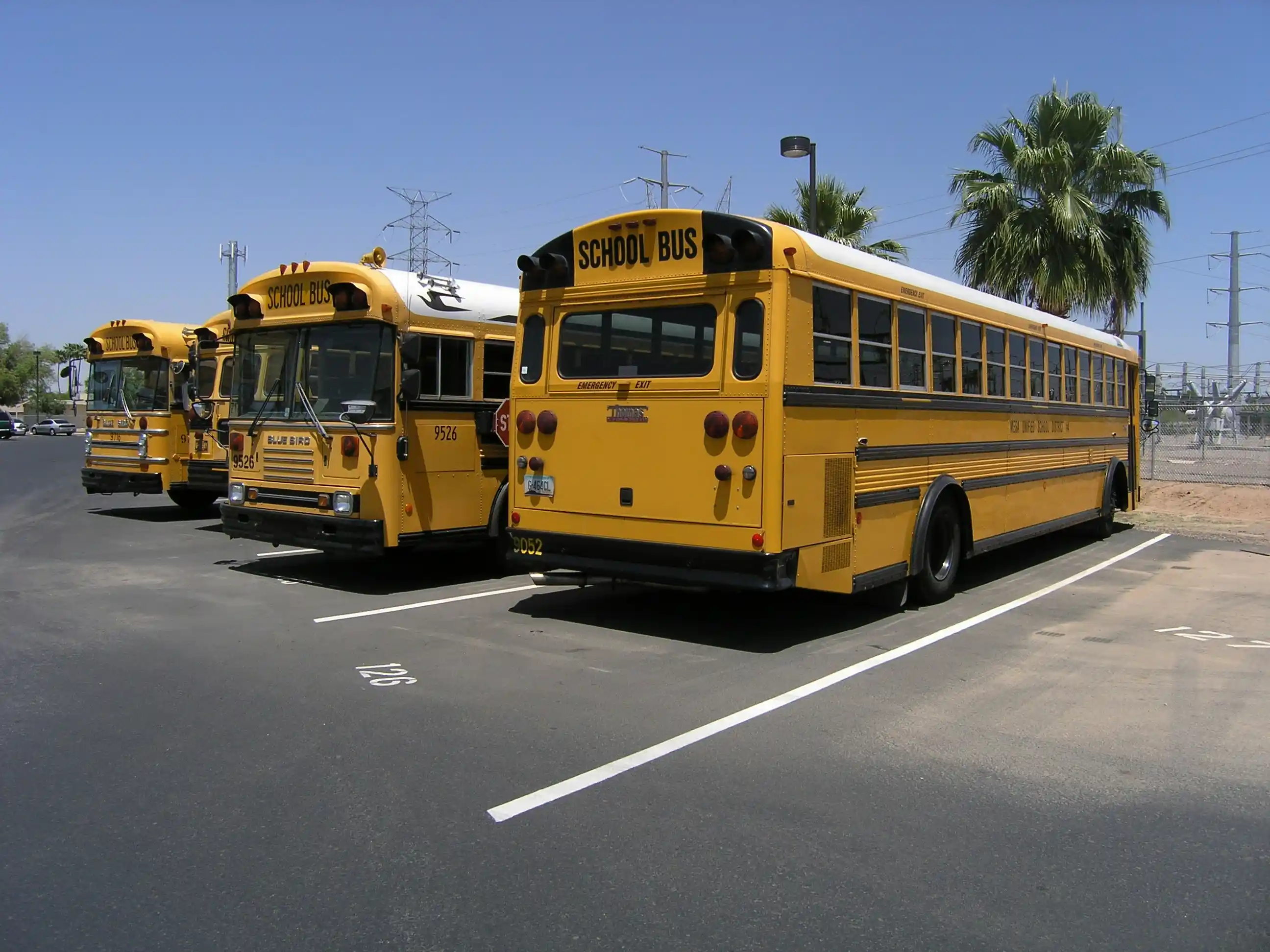
For tournament transportation specifically, the charter coach is almost always the right call over a yellow school bus.
Three reasons.
One: athletes arrive less fatigued. A 50-mile drive in reclined coach seats is meaningfully different from the same drive in school bus benches, especially for kids who will be playing multiple games that day.
Two: equipment storage. Tournament weekends involve uniforms, multiple pairs of cleats, water jugs, coolers, medical bags, and often goals or other team equipment. Coach undercarriage bays solve this; school buses don't.
Three: bathroom access. Tournament travel often involves longer drives, and stopping a bus full of pre-game athletes who are also hydrating heavily is operationally annoying.
The cost difference between a school bus and a coach for a tournament weekend is usually 40 to 70 percent. That's real money, but for a team paying $400 per player for a tournament, the bus difference is rarely the breaking point.
Hotel coordination
If the tournament involves an overnight stay, the hotel relationship is part of your transportation planning.
Confirm bus parking at the hotel when you book the room block. Many suburban hotels have lots that physically cannot accommodate a 45-foot coach.
Ask the hotel about overnight driver parking and whether they have a relationship with any local lots that handle commercial vehicles overnight.
If the driver is staying with the team (common for multi-day tournaments), the hotel needs to be informed about driver lodging. Most operators include driver lodging in the quote; confirm whether the hotel will be billed by the operator or by you.
The meal stop logistics nobody talks about
For multi-day tournaments, meal stops are a structural part of the schedule, not an afterthought.
Coach buses can navigate most fast-casual parking lots. They cannot easily navigate most strip mall parking lots.
Plan your meal stops at locations that can handle a 45-foot vehicle. Chipotle, Chick-fil-A, Panera, and Cracker Barrel are the four most reliable nationwide options for school sports team meal stops because their lots are typically designed for tour bus access.
Pre-order if possible. Walking 28 hungry 12-year-olds into a Chipotle on a Saturday at noon without a pre-order takes 90 minutes. With a pre-order, it takes 25.
For tournaments with parents traveling separately, communicate the team's meal stops in advance so parents can rejoin the team if they want.
Weather contingencies
Tournaments get rescheduled. Saturday morning games become Sunday afternoon games. Sunday afternoon games become Saturday night games. The tournament director decides; you respond.
Build flexibility into your transportation contract. Most reputable operators will accommodate schedule shifts within the same tournament weekend without re-pricing, as long as the total hours don't change significantly.
What you want to avoid is a contract where any schedule shift triggers a re-quote. Ask explicitly: "If the tournament director moves our Saturday game to Sunday, is the bus available, and at what cost?"
Get the answer in writing.
Gratuity and driver care
Drivers on multi-day tournaments work hard. They're up before the team, available after the team, and often sleeping in unfamiliar hotels for two or three nights in a row.
Standard gratuity for a multi-day tournament is $50 to $100 per driver per day, paid at the end of the tournament. Some teams build this into the per-player fee so it's not an end-of-tournament awkward moment.
Beyond gratuity, the small stuff matters. A team manager who brings the driver a coffee on day two builds goodwill that pays back the next time you have an early call time and you're asking the driver to be on-duty at 5:30 a.m.
The team that treats the driver as part of the team gets better service. This isn't transactional thinking — it's just true.
What to confirm 48 hours before departure
Final headcount. Operators need to know whether to send a 56-seat coach or whether a smaller vehicle works.
Pickup time and location. If multiple pickup stops are involved (some teams pick up from two or three high schools), confirm each stop in writing.
Driver contact info. You should have the driver's cell number, not just the dispatch number, before departure morning.
Final itinerary. Send the operator the same itinerary you're sending to the team families.
Equipment manifest. If you're bringing goals, large coolers, or anything unusual, the driver needs to know in advance so they can plan loading.
Building a transportation budget for the season
For club teams that travel to multiple tournaments per season, work with one operator across the whole schedule rather than booking each tournament separately.
Operators discount fleet bookings, and they prioritize repeat clients during peak season.
Build your transportation budget at the start of the season, not tournament by tournament. A typical youth travel team running four tournaments per season can budget $4,000 to $8,000 in transportation depending on distance and vehicle type.
Spread across 18 to 24 players, that's $175 to $450 per player per season for transportation alone.
For most families, this is a manageable line item in the total tournament budget. It becomes a problem when it's not budgeted for at the start of the season and gets added piecemeal.
The booking conversation
When you call an operator for a tournament quote, have these details ready.
Tournament name and dates. Pickup location(s) and time(s). Number of players, coaches, and any staff or chaperones. Destination(s) — which fields, which hotel.
Whether you need live availability or drop-and-return. Whether the trip is overnight. Whether you have equipment beyond standard player bags.
An operator who can quote this in 10 minutes with a written breakdown is a serious operator. An operator who needs three days to come back with a number is going to be slow when you need them most.
At Maytav Bus, tournament transportation is one of the trip types we handle most frequently for clubs and travel teams across New Jersey. When you're ready to talk specifics for your tournament, we'll walk through the schedule with you and give you a clear quote with all the line items broken out — driver hours, fuel, tolls, hotel costs if applicable. Either way, the most important move is starting the conversation early. Tournament weekends fill up fast, and the team that books in March for a June tournament gets better vehicles, better drivers, and better pricing than the team that books in May.